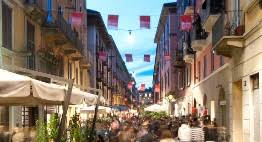
If you want to feel Milan’s creative pulse without the velvet rope, you start in Brera. Within a few blocks, you move from Renaissance canvases to radical lighting prototypes, from cobbled lanes to concept showrooms. Milan’s Brera District is the heart of modern Italian creativity because it layers art, design, craft, and good old-fashioned neighborhood life, beautifully and convincingly, into one walkable grid. Here’s how to see it like you mean it.
Why Brera Is The Heart Of Modern Italian Creativity
Brera’s power is proximity. You’re never far from the next idea. Palazzo Brera houses both the prestigious Accademia di Belle Arti and the Pinacoteca di Brera, so students, curators, and masterpieces share the same roof. Two streets away, lighting designers test new forms in low-lit studios. Around the corner, a luthier tunes a violin while a gallery hangs a fresh show. It’s a daily, organic conversation between past and future.
The neighborhood’s scale helps. Brera is compact and mostly pedestrian, so you can browse Via Fiori Chiari’s antiques, cut through a fragrant courtyard, and end up at a cutting-edge showroom on Via Pontaccio in minutes. It’s also a social ecosystem: academics meet art directors over espresso, artisans swap suppliers, and visiting architects drop in during Milan Design Week. Creativity here isn’t staged: it’s lived.
And you feel Milan in microcosm: rigorous, stylish, pragmatic. Brera’s institutions guard standards, its designers push forward, and its shops and bars give you reasons to linger. That friction, the respectful tug between heritage and invention, is exactly what makes modern Italian creativity ring true.
From Bohemian Quarter To Design District
Once upon a not-so-distant time, Brera was scrappier. After World War II, cheap rents drew painters, poets, and photographers: the legendary Jamaica Bar became a hangout for artists and journalists. You still see traces of that bohemian chapter in the graffiti ghosts on studio doors and the proudly independent galleries tucked into courtyards.
Then Milan’s design engine kicked into higher gear. From the late 20th century onward, furniture and lighting brands began opening showrooms near the historic center. Brera, central, handsome, and steeped in art, was the obvious stage. As Salone del Mobile grew into the world’s most influential furniture fair, the city’s off-site program, Fuorisalone, found a natural home here. Brera’s streets turned into a curated open-air design festival.
Today, you navigate a more polished district, think restored palazzi, confident retail, and doors that slide open at a whisper. But the DNA didn’t vanish. Many showrooms keep workshops or prototyping spaces visible: makers spill onto the street during openings: and the neighborhood still tolerates a bit of beautiful mess. It’s a district that matured without losing the itch to experiment.
Art Anchors: Pinacoteca, Accademia, And Independent Galleries
Start with the anchors. The Pinacoteca di Brera is Milan’s most important art museum after the Duomo complex, with a collection that feels personal rather than overwhelming. You stand inches from Caravaggio’s Basket of Fruit and Mantegna’s Dead Christ, then drift to Bellini, Piero della Francesca, and Hayez. The display strategy invites pauses: benches and sightlines are thoughtful, and the lighting flatters without fuss. Inside the same complex, the frescoed halls and the tranquil Caffè Fernanda make lingering a pleasure.
The Accademia di Belle Arti lives next door, shaping generations of painters, designers, and multimedia artists. The overlap matters: students sketch in the galleries, professors consult on exhibitions, and visiting curators scout talent. You’re seeing a pipeline in real time, from training to museum walls.
Beyond the big names, Brera rewards curiosity. Small galleries on Via Fiori Oscuri, Via Madonnina, and Via Ciovasso rotate shows quickly: emerging Italian painters, collectible design pieces, photography, and the occasional performance. Step into a courtyard if a gate’s open: many spaces hide behind ivy and terracotta. On quieter weekdays, gallerists are happy to talk, ask about the artist’s process or where their collectors are coming from. That’s where you catch the district’s future before it trends.
Design And Craft: Studios, Showrooms, And Workshops
Brera is where Italian design stops being an abstract idea and becomes a thing you can touch. On Via Pontaccio, Via Solferino, and Via Statuto, you’ll find flagship spaces for furniture and lighting heavyweights, brands like Cassina, Boffi, Moroso, Flos, and Artemide, staging rooms as if people actually lived in them. It’s design as cinema, sure, but under the styling you can sense the engineering and materials Milan is famous for.
Look down the side streets for the heartbeat. An artisan goldsmith soldering a ring at a bench, a bookbinder cutting leather by hand, a tailor pinning a jacket under clean light. These workshops aren’t backdrops: they’re businesses, often passed down through families. Ask politely, and you’ll sometimes get a five-minute masterclass on finishes or fabrics.
Come April, the Brera Design District leads Fuorisalone programming with installations, open studios, talks, and late hours. The energy is contagious, entire courtyards are transformed into immersive projects. If you’re in town then, bring patience and comfortable shoes: you’ll cover ground and double back gladly.
One Perfect Day In Brera
Morning: Courtyards, Coffee, And The Pinacoteca
Slip in early, when Via Brera still smells like espresso and stone. Start at the Orto Botanico di Brera, the small botanical garden tucked behind the palace: it’s a pocket of calm with medicinal beds and seventeenth-century charm. From there, wander into Palazzo Brera when the doors open. Give the Pinacoteca a generous two hours, Caravaggio’s still life is tiny and electric: Mantegna’s foreshortened Christ stops time. Pause at Caffè Fernanda for a silky cappuccino beneath the mid-century chandeliers. If you prefer street-level people-watching, grab a stool at a local bar on Via Madonnina.
Afternoon: Design Showrooms And Artisan Finds
Head toward Via Pontaccio and Via Solferino to tour design showrooms. Don’t rush, sit on a sofa, open a cabinet, test a lamp. Staff are used to curious visitors and often know the backstory of a piece down to the factory. Cross to Via Fiori Chiari for antiques and a rummage through print shops: you might spot a vintage Murano sconce or a 1970s Milano poster waiting for a second life. Duck into a jewelry studio on Via Fiori Oscuri to watch a setting come together under a loupe. Late lunch? A simple plate of risotto alla milanese and a glass of Franciacorta will keep you buoyant.
Evening: Aperitivo, Jazz, And Lantern-Lit Lanes
As the light drops, Brera turns theatrical. Pick an aperitivo spot with outdoor tables, Campari spritz or a Negroni Sbagliato, plus the usual parade of olives and grissini. Walk to the Church of San Marco: on some evenings, the nave hosts classical or jazz concerts, and the acoustics wrap you in warm brick. Afterward, stroll the lantern-lit alleys, Via Fiori Chiari, Via Fiori Oscuri, Via Madonnina, where conversations spill in Italian, English, and the language of shoes on stone. If you’ve still got energy, detour toward Corso Garibaldi for gelato before calling it a night.
Practical Tips And Best Times To Visit
Getting There And Around
Brera sits just north of the Duomo and is easy to reach on foot from the center. The M2 metro line stops at Lanza and Moscova: Montenapoleone (M3) is a short walk for the southern edge. Trams and buses web the perimeter, but once you’re in, you’ll want to walk, many streets are pedestrianized or calm. Driving isn’t worth it: Milan’s Area C congestion charge applies on weekdays, and parking is scarce.
When To Go: Fuorisalone And Beyond
April is electric thanks to Milan Design Week and Fuorisalone, with Brera as a headline stage. Expect crowds and late-night openings: book lodging and museum slots early. If you’d rather breathe, aim for late May or September: warm light, active galleries, and fewer queues. Winter has its mood, fog, glowing windows, and quieter rooms at the Pinacoteca, though daylight is short. The Pinacoteca is typically closed on Mondays, so plan accordingly.
Respecting The Neighborhood
Brera is lived-in, not a theme park. Keep voices low late at night, don’t block narrow lanes for photos, and ask before shooting inside workshops or galleries. In churches and museums, follow signage on flash and bags. Support the ecosystem by buying a small print, a handmade object, or even just a coffee from a family-run bar, your euros help keep the creative loop alive.
A quick checklist so you don’t miss the essentials:
- Pinacoteca di Brera and the Orto Botanico for art and calm
- Via Pontaccio/Via Solferino showrooms plus the side-street artisans for design and craft
Conclusion
You come to Brera for beauty and leave with perspective. The district shows you how Italy keeps reinventing itself without losing the thread, how a Renaissance palazzo can house a world-class museum, a renowned art school, and a coffee bar where a designer sketches a lamp on a napkin. If Milan’s Brera District is the heart of modern Italian creativity, it’s because you can hear it beating from gallery to workshop to sidewalk table. Give it a day, better yet, two, and let the neighborhood recalibrate your idea of what a creative city feels like.
No responses yet