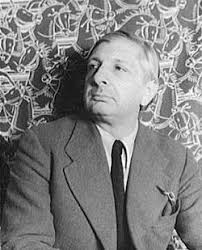
You can’t really understand Surrealism, or the mood of modern art between the wars, without first stepping into Giorgio de Chirico’s dreamlike piazzas. As the father of Metaphysical art, he gave you tools to see reality slantwise: long shadows that refuse the hour, statues that seem to overhear your thoughts, and objects assembled like stage props for a drama you can’t quite name. This guide walks you through how de Chirico built that language, why it mattered to the Surrealists, and how to read the quiet thunder of his canvases today.
Early Life, Training, and Turning Points
From Greece to Italy: Classical Roots
You start with a cosmopolitan childhood. Giorgio de Chirico was born in 1888 in Volos, Greece, to Italian parents. The classical world was less a subject than an atmosphere, friezes, ruins, marble torsos, part of daily life. He trained in Athens and later in Italy, absorbing Renaissance draftsmanship and the clarity of Italian space. Those roots mattered. When you see a de Chirico statue or arch, you’re not encountering generic “antiquity”: you’re sensing his memory of the Mediterranean as a place where myths and everyday time coexist.
The decisive turn came in Florence around 1910. Sitting in Piazza Santa Croce, de Chirico felt what he later called a “revelation.” The architecture, the crisp fall light, and a feeling of estrangement clicked into a new pictorial logic. Out of that moment came a style that didn’t describe what the eye sees so much as what a place feels like when consciousness takes a step back and listens.
The Munich Years and Nietzschean Influence
Before Florence, there was Munich. At the Akademie der Bildenden Künste, de Chirico absorbed late 19th-century German currents: Arnold Böcklin’s haunted classicism, Max Klinger’s symbolic narratives, and the metaphysical skepticism of Nietzsche and Schopenhauer. Nietzsche, in particular, gave you a mood-map: the sense of recurrence, the uncanny familiarity of the mundane, and the isolation of the thinking self in a public square.
That philosophy shows up in his paintings as stubborn clarity. The perspective is often razor-precise, almost textbook, yet the logic of time collapses. Everything is visible, but nothing is explained. It’s Nietzsche translated into architecture, shadow, and silence.
What Is Metaphysical Painting?
Empty Piazzas, Long Shadows, and Enigma
Metaphysical painting, as de Chirico invented it, isn’t about mysticism or abstraction. It’s about pulling the rug out from under visible reality. You get sunlit squares with late-afternoon shadows that stretch like accusations, trains that cruise the horizon like afterthoughts, and arcades that frame a stage you can’t enter. The air is lucid, the geometry clean, and still you feel time wobble. That’s the enigma: total visibility, zero closure.
Empty piazzas magnify your presence as a viewer. No crowd to hide in, no narrative to coast on. Instead, your eye paces the canvas, landing on details that act like clues: a closed storefront, a clock that refuses to tell time, a plume of smoke. De Chirico makes clarity eerie.
Mannequins, Statues, and the Theater of Objects
When World War I brought him to Ferrara, de Chirico’s stage set became more interior, and more theatrical. Mannequins arrived: headless, faceless figures that stand in for people the way chess pieces stand in for armies. Around them: spheres, rulers, biscuits, drafting tools, maps. These aren’t random props: they’re metaphors for measurement, appetite, navigation, human intentions stripped to objects.
Statues and fragments act as actors who remember other tragedies. Their mute witness deepens the sense that you’re watching a play rehearsed in private, with the world left outside the theater door.
Defining Works and Why They Matter
The Enigma of an Autumn Afternoon
This is the foundational scene, painted in 1910 after that Florence revelation. You look at a square that seems both ordinary and metaphysically loaded. The archways promise passage, yet the space feels sealed. The shadows are long, but the day won’t end. This was the moment when de Chirico realized he could make a picture think. You read it not as a view of a place, but as a proof that mood can be constructed out of straight lines and light.
The Melancholy of Departure
In several versions across the mid-1910s, de Chirico fused travel, memory, and stagecraft. There’s often a train on the horizon, or a station implied rather than seen. Inside, maps, compasses, and measuring tools sit like a toolkit for a journey you can’t start. You feel the pull of leaving without the relief of motion, melancholy because departure here is an idea, not an action.
Why it matters to you: it’s modern life distilled. Schedules, instruments, itineraries, all the apparatus of control, converge on an emotion that refuses to be organized.
The Disquieting Muses
In Ferrara, de Chirico’s mannequin figures took on mythic weight. The so-called muses are jointed, monumental, faceless, classical and post-human at once. Factory smokestacks or fortress walls tighten the scene’s grip. This canvas shows you the pivot from exterior piazza to interior theater: myth relocated to the modern city, where inspiration looks like a riddle you approach but never solve.
These works endure because they turn composition into philosophy. Perspective is a question, light is a provocation, objects are syntax.
Paving the Way for Surrealism
Breton, Magritte, and the Poetics of the Object
André Breton called de Chirico a revelation. For René Magritte, encountering de Chirico was like having the curtains pulled back on his own mind. What they borrowed wasn’t just imagery: it was permission. De Chirico showed you that an ordinary glove or a ball could carry poetic voltage if placed with unnerving precision. The Surrealists took his poetics of the object and ran toward dream, automatism, and free association.
De Chirico’s stage-set spaces also gave Surrealism a grammar for dislocation. Empty streets, deep arcades, errant trains, these are narrative catapults. You step in, and you’re already between waking and sleeping.
Dream Logic Versus Metaphysical Enigma
Here’s the fork in the road. Surrealism courts dream logic: fluid images, erotic charge, psychic automatism. De Chirico prefers enigma: fixed forms, cool light, the hush before meaning arrives. You don’t float through a de Chirico: you stare, measure, reconsider. The tension between his stillness and Surrealism’s flux made the 20th century’s most generative conversation in painting. Even when the Surrealists moved on, they carried his insistence that the seen world is a stage and the props are alive.
Style Shifts, Controversies, and the Question of Authenticity
The Return to Classicism and Self-Revisions
Around 1919, de Chirico turned toward a more overt classicism, lusher paint, Renaissance echoes, horses, gladiators. He also revisited earlier motifs, repainting or “correcting” them decades later. From your vantage, this reads like a composer reorchestrating an early score. But it created confusion: which versions were canonical? Were late reinterpretations extensions or afterimages?
Forgeries, Replications, and Market Disputes
De Chirico’s habit of revisiting his own work, sometimes dating canvases in ways that aligned them with earlier periods, collided with a market eager for the Metaphysical years. Add forgeries circulating under his name, and you get a thicket of disputes. For you as a viewer, the takeaway is cleaner than the paperwork: authenticity in de Chirico isn’t only a signature question: it’s a question of metaphysical temperature. Do the space, light, and objects click into that uncanny charge? Museums and foundations have worked to clarify provenance, but the debates underscore how potent, and coveted, those early inventions remain.
Legacy, Viewing Tips, and Where to See His Work
Reading Space, Time, and Silence
To get the most from de Chirico, slow down. Let your eye map the geometry, then attend to the anomalies. Ask yourself: what time is it, and why won’t the light agree? Which object breaks the logic of the room? Where would you stand if you had to enter the scene?
A few field-tested prompts when you’re in front of a canvas:
- Track the shadows first: they’re the plot. Then find the object that doesn’t belong, it’s the twist.
- Look twice at horizons and doorways. They often promise escape but deliver awareness instead.
Museums and Collections Around the World
You can meet de Chirico’s work across Europe and the United States. In Rome, the Fondazione Giorgio e Isa de Chirico keeps his former home and a focused collection, a perfect place to sense the atmosphere that fed his imagination. Major museums such as MoMA, The Met, Tate, the Centre Pompidou, and the Peggy Guggenheim Collection regularly show his paintings. In Ferrara and elsewhere in Italy, regional museums have deep holdings from the Ferrara period, where the mannequins and measured interiors crystalized.
If you’re planning a trip, check rotation schedules: de Chirico’s works often appear in thematic shows on Surrealism, modern Italy, and the metaphysical turn.
Lasting Influence Beyond Surrealism
De Chirico’s afterlife doesn’t stop with Breton and Magritte. Postwar painters borrowed his theater of objects: filmmakers tapped his pacing (think long takes that make space feel sentient): photographers and designers use his angles and horizons to produce unease on purpose. Even contemporary installation art echoes his proposition: stage a room so precisely that viewers feel watched by the things inside it.
For you, the practical legacy is a way of seeing. Once you’ve internalized de Chirico, a train behind a building isn’t just a train: it’s a line of thought crossing your day.
Conclusion
Giorgio de Chirico earned the title “Father of Metaphysical Art & Surrealism” by changing how you read the visible world. He made clarity strange, built philosophy out of sunlight and stone, and handed later artists a blueprint for turning objects into poetry. Next time you find yourself in a quiet square at the wrong hour, notice how the shadows lengthen and the sounds thin out. You’re in de Chirico country, where the stage is set, the actors are props, and the plot is the enigma you carry out of the frame.
No responses yet