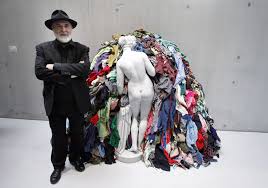
If you want to understand why post-war Italian art still feels startlingly alive, you can’t skip Arte Povera. Framed by critic Germano Celant in 1967, the movement challenged what counted as art, and what materials were worthy of it, right as Italy was remaking itself. In this guide to Post-War Italian Art: The Impact of the Arte Povera Movement, you’ll see how artists used humble stuff, wood, earth, cloth, neon, even live animals, to pry open new meanings around politics, nature, and everyday life. The result wasn’t just an aesthetic shift: it was a seismic recalibration of how you experience art in space and in society.
Italy After the War: Conditions That Birthed Arte Povera
Economic Boom and Cultural Disillusionment
You can’t grasp Arte Povera without the contradictions of Italy’s postwar miracle. Through the 1950s and early ’60s, the country rocketed from scarcity to mass consumer culture. New highways stitched the peninsula together, TV sets flickered in living rooms, and factories on the northern industrial belt hummed. Yet the prosperity felt uneven, and for many young artists the sheen of modernity masked a deeper fatigue with institutions, class divides, and imported models of progress.
By the mid-1960s, student movements, labor strikes, and debates around Americanization sharpened that skepticism. If culture was becoming a commodity, why not use materials that refused polish and status? Arte Povera wasn’t anti-modern so much as anti-complacent. It insisted that you locate meaning in the raw state of things, energy before product, process before monument.
Regional Hubs: Turin, Rome, and Naples
Turin’s factories and avant-garde galleries formed a hothouse, with artists engaging directly with industry and its detritus, think steel, glass, neon. Rome brought theater, film, and a more baroque sense of staging: installations there often unfolded like scenes rather than objects. Naples contributed a different charge: proximity to the earth, to ruin and rebirth, to myth layered onto a very present-tense city. Together, these hubs incubated a movement that was regional in flavor but international in ambition.
What Made Arte Povera “Poor”: Ideas, Materials, and Methods
Everyday and Organic Materials
When you encounter Arte Povera in person, the first surprise is what you’re looking at. Burlap sacks. Twigs. Lead sheets. Wax. Soil. Rags. Newspapers. Even flame and ice. “Poor” didn’t mean meager: it meant non-precious, unhierarchical, close to life. By pivoting to everyday matter, the artists asked you to notice textures and energies that fine art typically hides: the grain in wood, the porosity of stone, the smell of damp earth.
- Core materials you’ll often find: wood, earth, rope, fabric, glass, stone, lead, copper, neon, plants, and occasionally live animals.
Process, Ephemerality, and Anti-Form
Arte Povera privileged becoming over being. Many works were temporary or changeable: ice blocks melting, plants growing, flames licking at metal, salt crusting over objects. You’re meant to sense time as a material in itself. Anti-form wasn’t a rejection of discipline: it was a refusal to lock a work into rigid geometry or eternal perfection. A coil of wire could feel like a thought mid-arc. A stack of felt or a heap of branches signaled openness, art as an event you witness rather than a thing you simply own.
Politics, Myth, and Nature
The “poverty” was also ideological. These artists resisted the slickness of consumer culture and the neutrality of high modernism. They were political without becoming didactic, often folding myth and nature into their critique. You’ll see references to classical stories, agricultural cycles, the Fibonacci sequence, and alchemical transformations. Arte Povera connected the factory floor to the forest floor, implying that your life sits at the intersection of both.
The Artists Who Defined the Movement
Mario Merz and the Fibonacci of Everyday Life
Merz’s igloos, domes of branches, metal, glass, or clay, feel ancient and futuristic at once. He often scrawled neon numerals following the Fibonacci sequence across walls or objects, suggesting organic growth patterns hidden in cities and economies. When you stand before a Merz igloo, you sense shelter as idea, number as nature, and neon as a borrowed sign of commerce repurposed for reverie.
Jannis Kounellis and Theater of Materials
Kounellis treated the gallery like a stage where materials performed. In one famous 1969 action, he installed live horses inside a Roman gallery, recentering animal presence within a space built for contemplation. You might encounter coffee, coal, sacks, iron plates, or flames in his work. The effect is experiential: weight, smell, sound, heat, art that reaches you before you’ve had time to interpret it.
Michelangelo Pistoletto and the Mirror as Social Space
Pistoletto’s mirror paintings fold you into the picture. Photographic figures printed on reflective steel place your body, and the room, inside the artwork’s field. Every glance becomes a new composition. For you as a viewer, the message lands fast: art isn’t elsewhere: it happens where you stand. These works also tease the spectacle of modern life, turning display windows and billboards back onto themselves.
Alighiero Boetti, Systems, and Collaboration
Boetti delighted in systems, language, and shared authorship. His embroidered world maps (Mappa), produced with Afghan craftswomen, align geopolitics with patient handiwork. Date pieces, postal works, and word grids reveal a mind intrigued by order and chance working in tandem. You’re invited to read patterns and also to notice when they fray.
Giuseppe Penone and the Body of the Tree
Penone’s sculptures reveal trees as living archives. He carved back industrial lumber to “find” the sapling within, or impressed his breath onto leaves using gold. His practice makes you feel kinship between your body and plant life, skin to bark, breath to leaf. Time, again, is palpable: growth rings, scars, and the slow intelligence of matter.
Exhibitions, Criticism, and the Break With Institutions
Germano Celant’s Manifestos and Shows
In 1967, critic Germano Celant published texts that named and framed Arte Povera, arguing for “guerrilla” tactics against ossified art systems. His curating connected artists across cities and made the case to international audiences. For you, this matters because movements don’t cohere by accident: they’re built through arguments, exhibitions, and a shared willingness to take risks in public.
Radical Installations in Galleries and Streets
The late ’60s and early ’70s saw installations that tested what a gallery could hold, and what might spill outside it. Piles of earth on polished floors. Gas flames along iron plates. Straw bales stacked like altars. Interventions seeped into courtyards and streets, compressing art and life. Instead of pristine white cubes, you got sites that felt provisional and responsive. The friction with institutions wasn’t just stylistic: it was structural, challenging how art is funded, displayed, and conserved.
Global Dialogues: Arte Povera and Its Contemporaries
Minimalism and Conceptual Art
You’ll hear Arte Povera compared with American Minimalism and Conceptual Art. The overlap is real, reduced forms, a focus on ideas, skepticism about the art object. But Arte Povera stayed closer to the tactile mess of life. Where Minimalism often favored industrial precision, Povera relished irregularities and organic energy. Conceptual artists dematerialized the object: Povera artists let materials think out loud.
Land Art and Ecological Concerns
Outside the gallery, Land artists were drawing lines in deserts and mapping entropy. Arte Povera shared this attunement to site and natural processes, but usually at a more intimate scale. When you see vines, soil, stones, and water circulating through Povera installations, you also see early ecological awareness, a sense that materials aren’t inert but networked with weather, bodies, and economies.
Performance and Theater
Arte Povera’s staging instincts brought it close to performance. Actions unfolded with fire, ice, animals, and people: the work changed as you moved through it. This theatricality wasn’t decoration. It underlined the politics of presence, who gets to appear, what counts as participation, how attention is structured in a room.
Legacies and Influence on Contemporary Practice
Material Experimentation and Sustainability
Contemporary artists who center reused, organic, or “low” materials owe a debt to Arte Povera’s fearless palette. Today, when you see biodegradable plastics, mycelium, or salvaged construction waste turned into sculpture, you’re watching a conversation Povera helped start. The emphasis on energy, change, and process dovetails with sustainability: the artwork isn’t a sealed product but a living system with inputs and outputs.
Social Practice and Institutional Critique
Pistoletto’s social mirrors and Boetti’s collaborations forecast today’s social practice, projects where communities co-author outcomes. Curators and artists now regularly question museum infrastructures, labor conditions, and the carbon costs of exhibition-making. If you’re building programs or collections, Povera’s legacy nudges you to value participation, context, and repair alongside aesthetic punch.
Conservation Challenges and Market Reception
Here’s the practical rub: “poor” materials age. Straw dries out, wax slumps, iron rusts. Conservators now work with artists’ estates to define what kind of change is acceptable, some transformation is the point, and when replacement or reactivation is faithful. The market took time to adapt. What once looked unsellable now commands serious attention, with institutions acquiring major installations and collectors accepting that stewardship may mean caretaking a process, not just an object.
Conclusion
If you’re tracing the arc of post-war Italian art, Arte Povera is the inflection point where materials became language and experience became the message. By insisting that humble matter could carry myth, politics, and life itself, these artists opened a path you still walk, through installations that breathe, surfaces that mirror you back, and systems that invite you in. That’s the enduring impact of Arte Povera: it teaches you to see the world’s raw edges as the work of art.
No responses yet