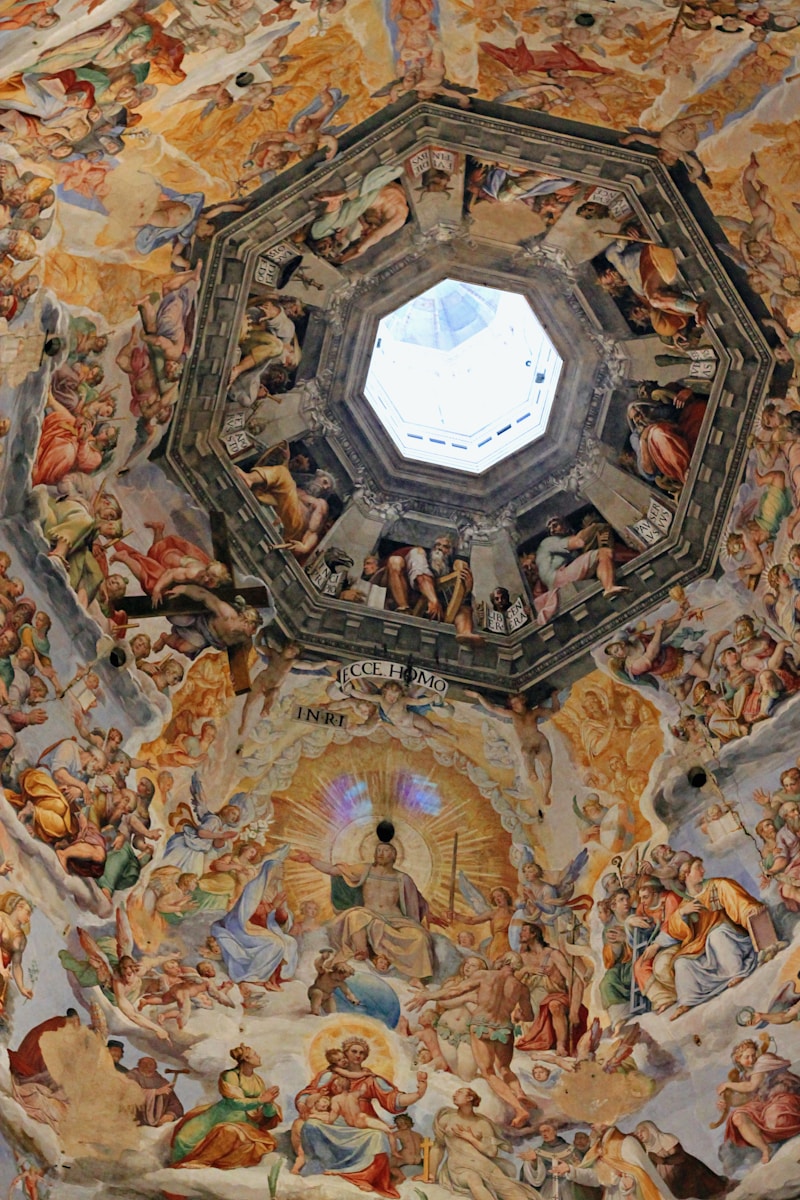
If you love Renaissance art but feel a bit lost the moment paint meets plaster, this guide is your shortcut. Early Renaissance frescoes in Florence aren’t just pretty walls: they’re the moment painting learns perspective, light, and human feeling. You’ll see experiments become standards, and you’ll feel the city’s politics and faith pressed, literally, into wet lime. Here’s how to understand what you’re looking at, where to find the best examples, and how to plan a simple, smart itinerary so you spend your time with the masterpieces, not in line.
Why Early Renaissance Frescoes Matter in Florence
Florence is where painting pivots from medieval gold grounds to believable space, solid bodies, and human emotion. Frescoes are the record of that pivot. From about 1400 to 1480, Florentine artists tested new ideas, one-point perspective, natural light, and classical motifs, on church and convent walls. Patrons (especially the Medici and key guilds) commissioned cycles that doubled as public storytelling and subtle power branding.
When you stand in front of these walls, you’re watching problems being solved in real time: How do you stage a sacred story so it feels present and persuasive? How do you make figures occupy space, not just float? Masaccio leads the charge with radical realism: Fra Angelico pairs theology with quiet clarity: Ghirlandaio adds social detail and polished narrative: Benozzo Gozzoli wraps politics in pageantry. In a compact city, you can trace this whole evolution on foot. That’s the magic of early Renaissance frescoes in Florence: an art history course painted at life size.
How Fresco Painting Works (and Why It Endures)
Buon Fresco vs. Fresco Secco
You’ll hear two terms. Buon fresco (true fresco) is pigment brushed onto wet lime plaster (intonaco). As the plaster dries, it carbonates and locks the color into the wall. It’s durable and luminous, but unforgiving: once dry, changes are nearly impossible. Fresco secco is painting on dry plaster with a binder (casein, egg, or glue). It’s handy for details or corrections, think gilding, final highlights, or adjustments, but it’s less stable over centuries.
Artists worked in giornate, day-sized sections of wet plaster that could be finished before the surface set. If you scan a wall and notice seams, you’re spotting those daily boundaries. They’re like chapters in the making of the mural.
Materials, Colors, and Working Against the Clock
The tool kit is simple and strict. Lime plaster, sand, and a fine finishing layer. Mineral pigments that can survive alkalinity: earth reds and yellows, green earth, natural blacks, azurite for blues. The diva of Renaissance blue, ultramarine (from lapis lazuli), doesn’t love wet plaster, so artists often reserved it for secco work, especially in cloaks of the Virgin, meaning blues could shift over time.
Because wet plaster waits for no one, planning was everything. Artists pricked full-scale drawings (cartoons) and pounced charcoal dust to transfer outlines, then painted decisively. You’re seeing confidence: volumes modeled quickly with light and shadow, forms simplified to read from a distance. That urgency is part of why buon fresco feels fresh five centuries on: the chemistry fuses color into stone, and the speed enforces clarity.
Must-See Frescoes and Where to Find Them
Brancacci Chapel, Santa Maria del Carmine (Masaccio and Masolino)
If you see one cycle, make it this. In the Brancacci Chapel, Masaccio’s “The Tribute Money” and “Expulsion from the Garden” change the game. Figures are weighty, light has direction, and perspective organizes space with eye-level logic. Masolino’s scenes are gentler and more decorative, so you can literally compare early 1420s styles side by side. Bring time: the chapel is small, and the longer you look, the more it tightens its grip, folds of drapery modeled like sculpture, shadows that pin feet to ground. Reserve ahead: timed entry is common and capacity is limited.
Convent of San Marco (Fra Angelico)
Step into a working Dominican convent turned museum and walk corridor after corridor of serenity. Fra Angelico’s frescoes, especially the Annunciation at the top of the stair, are about clarity, not drama. Architecture shelters the moment, color is restrained, and gestures read like prayer. In the monks’ cells, tiny scenes tailor theology to contemplation: you’re invited to slow down and notice angels’ feathered light, the hush of space, and the way local daylight completes the narrative. It’s an ideal second stop after the Brancacci’s force: you’ll sense how early Renaissance innovation also served devotion.
Tornabuoni Chapel, Santa Maria Novella (Domenico Ghirlandaio)
By the 1480s, narrative fresco in Florence is both grand and socially savvy. Ghirlandaio’s cycle in the main choir wraps sacred stories in contemporary Florentine life, portraits of patrons, chic clothes, real architecture. It’s polished and legible, a civic pageant with a spiritual backbone. If Masaccio is breakthrough and Fra Angelico is interiority, Ghirlandaio is orchestration: big casts, clear staging, and a feeling that you could walk right into the scene. The church ticket grants access: check hours, as services close areas at times.
Magi Chapel, Palazzo Medici Riccardi (Benozzo Gozzoli)
This jewel box is Medici messaging at its most beguiling. The “Journey of the Magi” winds through a dream landscape where the Magi, and, ahem, the Medici and their allies, process in opulent dress on spirited horses. Politics dressed as pilgrimage. Look for identifiable portraits, fine textiles, and the way Benozzo uses color to choreograph movement. It’s small, so timed entries help: you’ll want your eyes to wander without a crowd at your back.
What to Look For When You’re in Front of the Wall
Start by locating the horizon line. In early Renaissance frescoes, that’s your eye level: it organizes figures and architecture. Find the vanishing point and watch how orthogonals (tiles, beams) pull you into the scene. Then test the light: is there a consistent direction? Masaccio treats light like a sculptor, shadows ground forms. Ghirlandaio uses it to keep crowds readable. Fra Angelico softens it to invite contemplation.
Check gestures. Early Renaissance painters choreograph hands and glances to steer your attention. In the Brancacci, Peter points, Christ turns, tax collector gestures: you follow the story without captions. Color guides you, too, Virgin blues, martyr reds, the calm of green earth.
Finally, spot the seams of giornate and areas of secco retouching. Slight shifts in tone or flaking blue often mark the difference. Noticing the making doesn’t break the spell: it deepens it, letting you see decisions as well as devotions.
A Compact Itinerary to See the Essentials
If you’ve got one focused day, you can stitch the core sites into a satisfying loop.
Morning: Start at Santa Maria del Carmine for the Brancacci Chapel. Book the earliest slot you can: the chapel rewards quiet. Afterward, cross the Arno toward the convent of San Marco. The walk brings you through the historic center and clears your eye before Fra Angelico’s hush.
Midday: Grab a quick lunch nearby (Sant’ Ambrogio market is a lively option), then head to Santa Maria Novella for Ghirlandaio’s Tornabuoni Chapel. The church interior, nave to transept, sets the stage for his grand narrative.
Late afternoon: Finish at Palazzo Medici Riccardi’s Magi Chapel. Timed entry keeps it intimate, and late-day light outside frames the palace’s courting of power inside.
If you have a second day, revisit your favorite at a different hour. Fresco interacts with natural light: morning versus late afternoon can change everything you notice.
Practical Visiting Tips and Etiquette
Churches and former convents are living spaces: some feel more like museums, others still host services or prayer. Plan with that in mind.
- Book timed tickets for the Brancacci Chapel and the Magi Chapel when possible. Check closures: many Florentine museums close on some Mondays, and churches may restrict access during services. Dress modestly (shoulders covered is a safe bet), keep voices low, and never use flash. Photography rules vary, obey the posted signs. Allow your eyes to adjust: step back, then move in close. Fresco rewards patience.
If you want fewer crowds, aim for opening time or the last hour of the day. For Santa Maria Novella, confirm you’re buying the church/museum access (not just the basilica nave during service hours). San Marco’s cell frescoes are intimate: don’t block doorways, and let others cycle through. And, yes, bring a small pair of binoculars if you have them, details in upper registers snap into focus.
Conclusion
Early Renaissance frescoes in Florence aren’t assignments: they’re live encounters with artists figuring out how to make the sacred feel present and the world look real. When you know how fresco works, why it mattered here, and where to stand, the walls start to speak. Give yourself the time to listen, Masaccio’s gravity, Fra Angelico’s hush, Ghirlandaio’s civic theater, Gozzoli’s glittering procession, and you’ll leave with the city under your skin, not just in your photos.
No responses yet